Join Our Mailing List.
Receive monthly insights and important updates delivered straight from our consultants to
your inbox.

 Brian Chen, The New York Times’ lead consumer technology writer, recently compared Google’s new AI mode to traditional search engines with mixed results:
“A traditional Google search is still best for the simple act of looking for things to do nearby, but AI Mode could prove to be a nifty tool for more tedious tasks like product research for online shopping — an instant chart comparing baby car seats is helpful, even if imperfect. Just always check the answers.”
Brian Chen, The New York Times’ lead consumer technology writer, recently compared Google’s new AI mode to traditional search engines with mixed results:
“A traditional Google search is still best for the simple act of looking for things to do nearby, but AI Mode could prove to be a nifty tool for more tedious tasks like product research for online shopping — an instant chart comparing baby car seats is helpful, even if imperfect. Just always check the answers.”
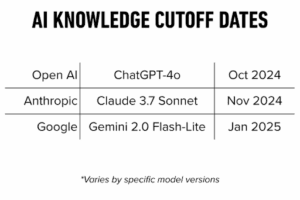 Once the model returns data from its existing knowledge, it conducts a limited real time search, similar to how you would on Google. This allows it to augment any missing information and correct factual inaccuracies.
Combining both of these pieces of information - knowledge and multiple real time searches - it returns a synthesized version. This is why AI search engine optimization can be trickier than the one-to-one traditional optimization.
Google’s newly introduced AI mode is particularly powerful using this method because it employs a “query fan-out” technique that returns results based on multiple searches of their structured data gathered from their crawler.
Compared to traditional one-to-one, AI searches require you to optimize your content for their historical knowledge and an undetermined number of interrelated queries.
Once the model returns data from its existing knowledge, it conducts a limited real time search, similar to how you would on Google. This allows it to augment any missing information and correct factual inaccuracies.
Combining both of these pieces of information - knowledge and multiple real time searches - it returns a synthesized version. This is why AI search engine optimization can be trickier than the one-to-one traditional optimization.
Google’s newly introduced AI mode is particularly powerful using this method because it employs a “query fan-out” technique that returns results based on multiple searches of their structured data gathered from their crawler.
Compared to traditional one-to-one, AI searches require you to optimize your content for their historical knowledge and an undetermined number of interrelated queries.
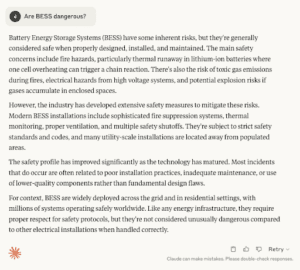 Remember this founding principle: you will never be able to feed AI an answer to a question. Instead, you want to make sure their sources are citation worthy and fact dense to inform their answer.
Because AI uses the “query fan-out” or similar technique, it might not pull from only your website. You'll want to optimize across your owned properties like websites, landing pages and blogs, extended properties like social channels, YouTube videos, press releases and Wikipedia articles, and non-online properties like downloadable PDF resources and content. AI looks at all these places to write an answer.
Additionally, you’ll want to ensure you have high authority on subjects. It’s unlikely that an individual searches for your organization directly, but instead for topics around your campaigns. Having other online entities like newspapers, blogs and nonowned channels reference your organization in relation to the topic will drive your authority on the subject.
When it comes to your properties, you’ll want to ensure copy that is citation worthy and fact dense. Do this by including original research, data and statistics when possible. Otherwise provide clear attributions and sources.
Other copywriting recommendations:
Remember this founding principle: you will never be able to feed AI an answer to a question. Instead, you want to make sure their sources are citation worthy and fact dense to inform their answer.
Because AI uses the “query fan-out” or similar technique, it might not pull from only your website. You'll want to optimize across your owned properties like websites, landing pages and blogs, extended properties like social channels, YouTube videos, press releases and Wikipedia articles, and non-online properties like downloadable PDF resources and content. AI looks at all these places to write an answer.
Additionally, you’ll want to ensure you have high authority on subjects. It’s unlikely that an individual searches for your organization directly, but instead for topics around your campaigns. Having other online entities like newspapers, blogs and nonowned channels reference your organization in relation to the topic will drive your authority on the subject.
When it comes to your properties, you’ll want to ensure copy that is citation worthy and fact dense. Do this by including original research, data and statistics when possible. Otherwise provide clear attributions and sources.
Other copywriting recommendations: